Life, education, awards, activism, and teaching
1940
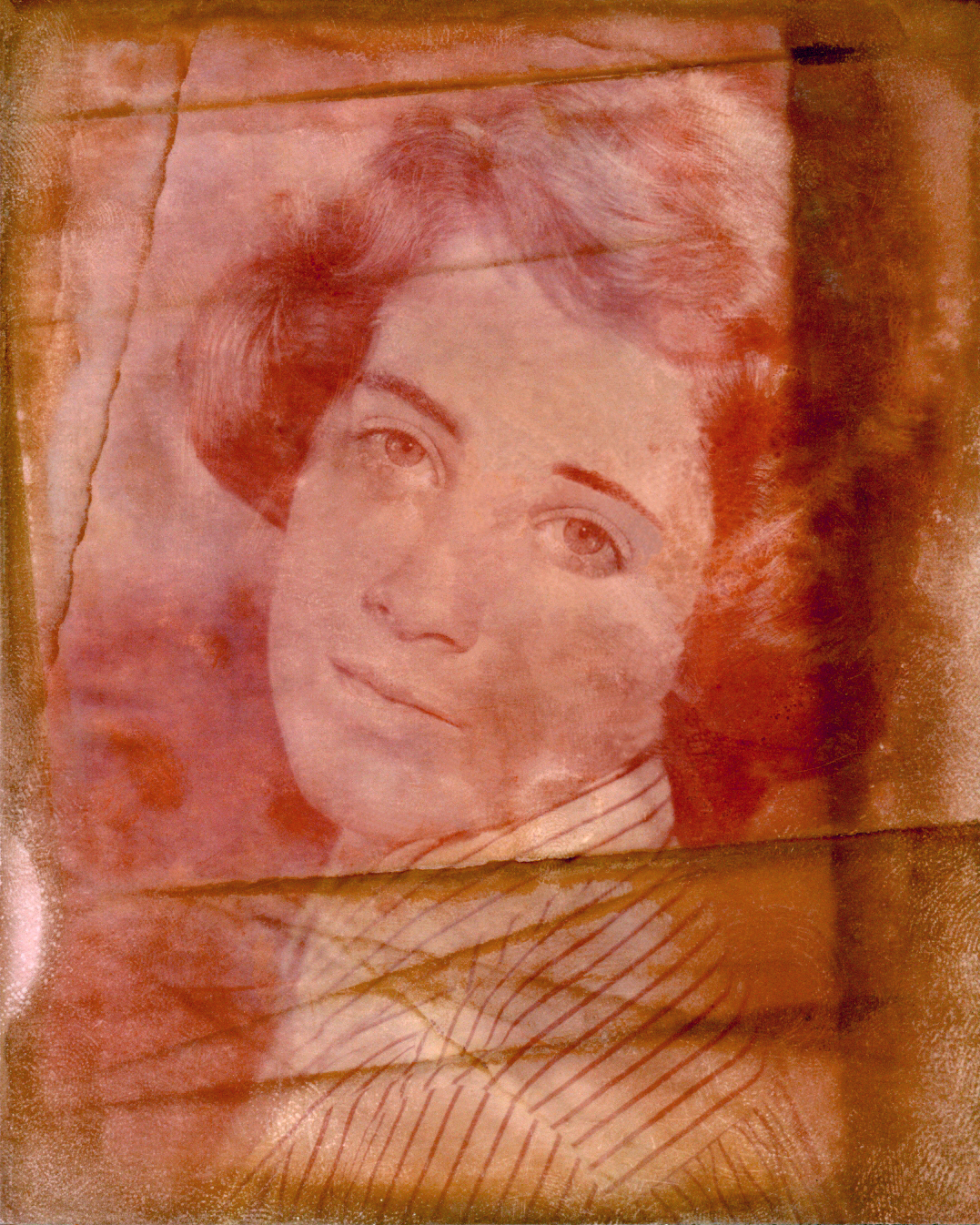
Antonieta Sosa Gámez was born on March 1, incidentally in New York to Venezuelan parents.
The family returns to Caracas in May.
1946-59
Studies at Colegio La Consolación, where she completed her secondary education.
1959-61
Attends the Escuela de Artes Plásticas Cristóbal Rojas as an auditing student.
Studies at the Academia Ballet Arte.
1960-62
Pursues studies in psychology at the Universidad Central de Venezuela (UCV), Caracas.
Marries the Venezuelan scientist Miguel Laufer. The couple moves to the United States to continue their studies.
1962-66
Undertakes and completes studies in visual arts and choreography in the respective departments at the University of California, Los Angeles (UCLA).
1966
Returns to Venezuela and settles with her husband at the Instituto Venezolano de Investigaciones Científicas (IVIC), Caracas. Gains recognition within the Venezuelan cultural milieu and begins exhibiting her work in both institutional and commercial venues.
Daughter Gabriella is born.
1968
Continues to experiment, develop, and exhibit her work.
Daughter Rebeca is born.
1969
Separates from Miguel Laufer.
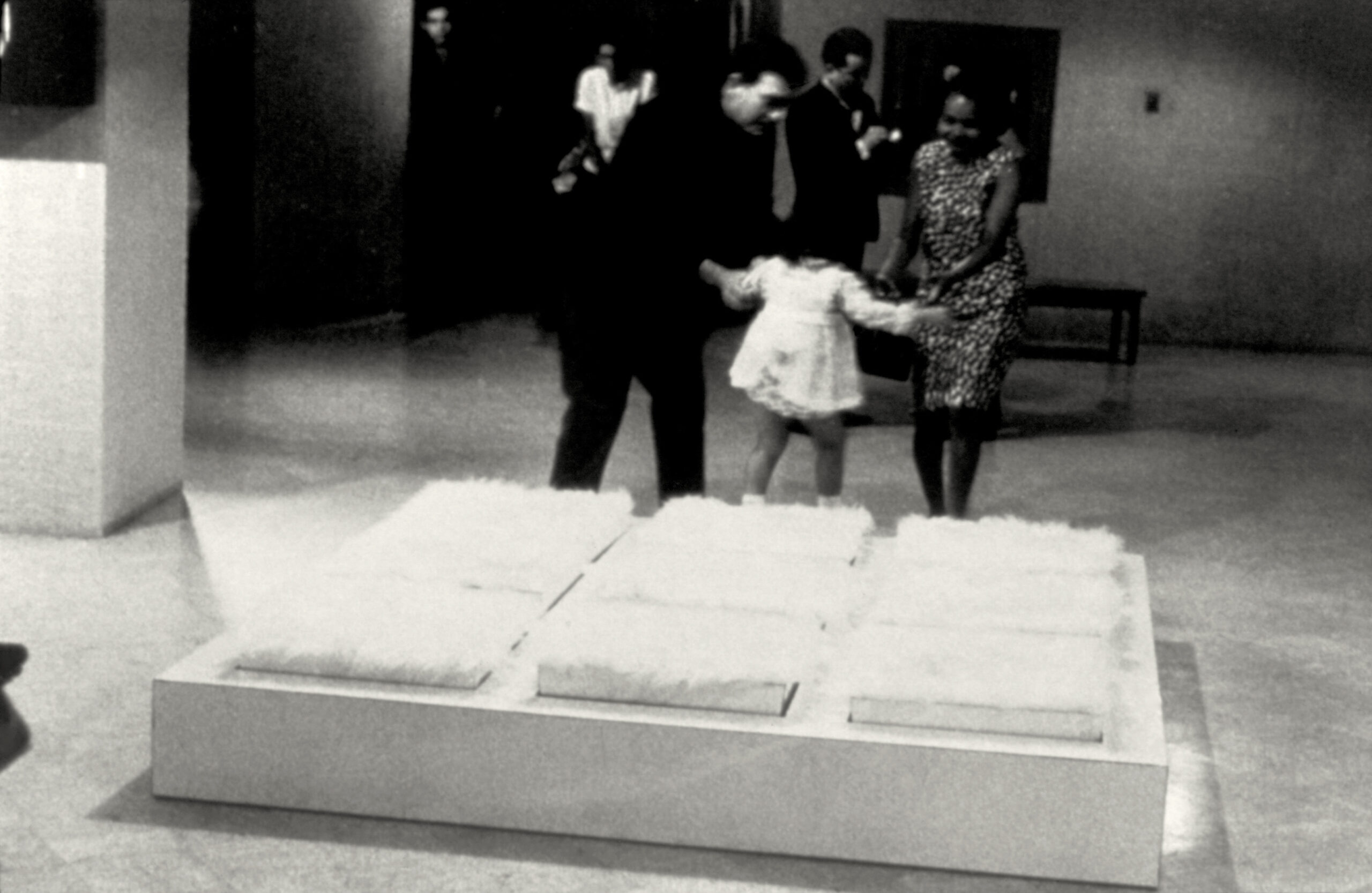
Destroys her participatory work Plataforma II in a public action. Choreographically planned by the artist and organized by a group of activist intellectuals, the action includes a procession from the Ateneo de Caracas to Plaza Morelos, during a presidential visit to the Museo de Bellas Artes. Conceived as a protest against the oppression of artists under the Brazilian military dictatorship, the destruction of Plataforma II joins the boycott of Venezuela’s official participation in the São Paulo Biennial and generates—even before taking place—a controversy covered by the national press.
1969-74
Begins teaching at the Instituto de Orientación en Arte y Ciencia.
1971
Participates in the production of the short film El insólito asalto al Royal City Bank (The Unusual Assault on the Royal City Bank), directed by the Venezuelan filmmaker Alfredo Lugo.
1971-92
Directs the children’s painting workshop at Colegio Emil Friedman.
1972-77
Teaches body expression in the Children’s Artistic Expression Workshop created by Venezuelan artist Mercedes Pardo at the Fundación Sala Mendoza.
1973-75
Co-founds Grupo Contradanza, directed by Venezuelan choreographer Hercilia López.
1974-79
Teaches body expression at CETRAC, a therapeutic community directed by Venezuelan psychiatrist and psychoanalyst Rafael Ernesto López.
1974-82
Serves as Full Professor of Visual Art at the Instituto de Educación Integral de San Bernardino.
Teaches a course in body expression for teacher-training students in the Department of Preschool Education at Universidad Metropolitana, Caracas.
1977
Travels to Japan, China, and Italy after being invited, together with the writer Luis Britto García, to the Third World Theatre Festival organized by Eugenio Barba, director of Odin Teatret in Denmark.
1983-93
Begins teaching in higher education, offering courses across different artistic fields at the Escuela de Artes Visuales Cristóbal Rojas, Caracas.
1991
Presents the paper “Alternative Methods in Art Education” at the First National Congress of Visual Artists, held during the II Bienal de Artes Plásticas in Mérida, Venezuela
1992-2010
Co-founds the Instituto Universitario de Estudios Superiores de Artes Plásticas Armando Reverón (Armando Reverón Institute of Higher Studies in the Visual Arts, IUESAPAR, Caracas), where she teaches in the Plastic Language Workshop. Supervises and serves on the juries of dozens of undergraduate theses. Is appointed Full Professor in her field.
1994
At the invitation of Jo Yarrington at Fairfield University, Connecticut, gives the seminar “Space-Body Relationship; Three Sessions, Including a Body Demonstration.”
1995
Gives the seminar “Beauty Everywhere” at the Museo de Bellas Artes, Caracas.
1996
Participates in the seminar “Art and Madness: Space of Creation,” held at the Museo de Bellas Artes in Caracas. The title of her paper is “Art and the Therapeutic in the Work of Lygia Clark and Antonieta Sosa.”
1996-99
Together with Sandra Pinardi, PhD in philosophy, and Luis Pérez-Oramas, PhD in art history, conceives and teaches the supplementary workshop “Thought and Creation.” The workshop serves as the pilot project for the development of IUESAPAR’s master’s program.
1999
Presents a paper at the Third International Symposium on Aesthetics in Mérida, Venezuela.
2000
Receives the National Arts Prize from the Venezuelan state in the category of Visual Arts.
2001
Promotes the development of IUESAPAR’s mixed-media specialization at a time when the institution offered only sculpture, ceramic, painting, and graphic arts.
2002
Although she was the only art professor at the institution with a university degree, is required by IUESAPAR to submit a thesis in order to obtain a bachelor’s degree and advance within the academic structure. Upon completion of that thesis, is awarded the BA in Art, major in Painting.
2006
Participates in the exhibition The Sites of Latin American Abstraction at the Cisneros Fontanals Art Foundation (CIFO), Miami, through an authorized reproduction of her work. This is due to her refusal to allow her original pieces to leave the country.
Her work Ajedrez Visual (Visual Chess, 1965) is acquired by the Patricia Phelps de Cisneros Collection. It's one of her few original works located outside Venezuela, after the work donation to MoMA, New York, in 2016.
2008
Travels to Panama to visit family and from there continues to New York and Cambridge, Massachusetts. Visits several museums and, at Harvard University, the exhibition Pedacito de Cielo (Little Piece of Heaven) at the Carpenter Center. The exhibition offers an account of the transition from modernity to contemporaneity in Venezuelan art and includes two authorized reproductions of her work. This further consolidates her practice of authorizing reproductions for the international circulation of her work, given her firm refusal, for sociopolitical, economic, and cultural reasons, to allow her works to leave Venezuela.
On May 14, IUESAPAR is officially closed and transformed into the Universidad Nacional Experimental de las Artes (UNEARTE), Caracas.
Begins the retirement process but is required to continue teaching. Withdraws to the apartment-studio, where work and writing continue. Receives visits from researchers and former students and is invited to exhibit her work and perform actions at national and international institutions.
2011
On September 30, she retires from UNEARTE, officially bringing to a close a forty-year teaching career—spanning from preschool to university level—in the visual and performing arts. She continues to stay in touch with her former students through correspondence and periodic visits. She also continues to present her artwork and performances.
2014
Receives, in absentia, the Achievement Award from the Cisneros Fontanals Art Foundation (CIFO), Miami.
2016
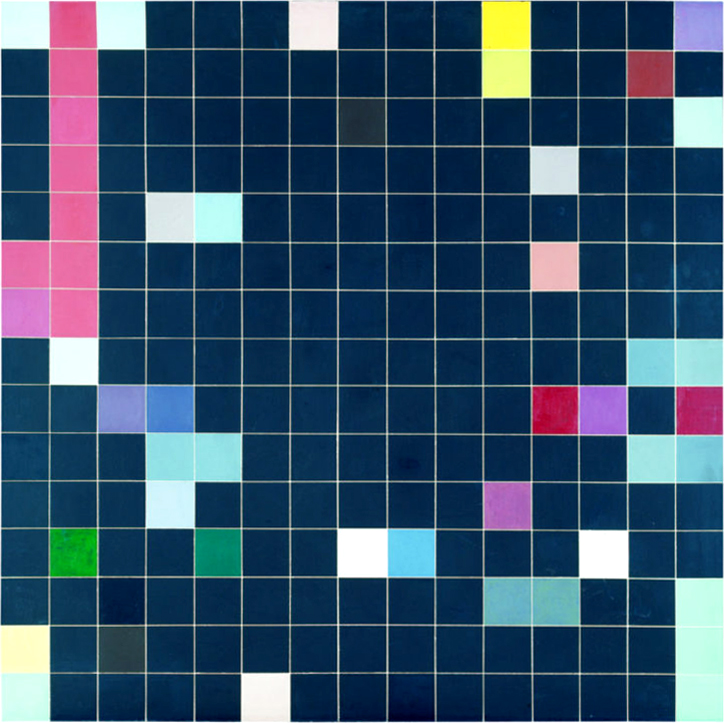
Her work Ajedrez Visual (Visual Chess, 1965) is donated to MoMA, New York, by the Patricia Phelps de Cisneros Collection. It is one of her few original works located outside of Venezuela. The work was directly acquired from the artist in 2006.
2024
Leaves her work documented and organized before dying at the age of 84 in her apartment-studio in Caracas.
Her legacy of experimentation, perseverance, and dedication continues to inspire her heirs and former students. They established the estudio antonieta sosa, which is dedicated to preserving and disseminating her lifelong interdisciplinary work.